
LinkedIn Patches #25 Answer
Stuck on today’s grid? Get the LinkedIn Patches #25 solution and expert logic to maintain your streak instantly. Beyond the answer, explore our tactical hints to refine your spatial reasoning and master the game through daily practice.
Patches #25 Answer
Start
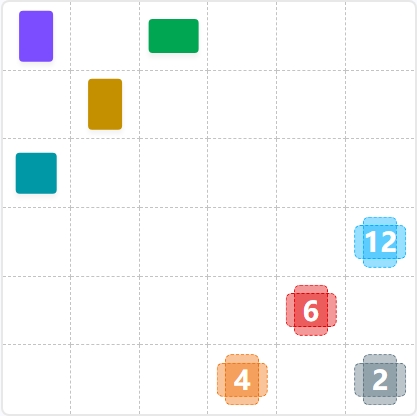
Answer
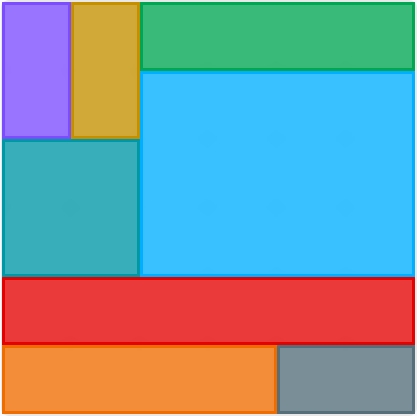
Patches #25 Expert Logic
🧩 Deep Logic Analysis
Solving Patches #25 requires a blend of spatial awareness and numerical factorization. To master this grid, one must look at how large-area patches dictate the boundaries for smaller, more flexible ones.
- The Bottom-Up Anchor: Start with the Red 6. While 6 can be , its position in the unsolved grid—centered horizontally near the bottom—suggests it acts as a structural divider. Placing it as a horizontal strip effectively seals off the bottom two rows, creating a "basement" for the remaining numbers.
- The Basement Constraint: Once the Red strip is placed, we are left with a area at the bottom. The Orange 4 and Grey 2 must share this space. Given their positions, the only logical fit is two horizontal strips: an for Orange and a for Grey. This clean partition is a hallmark of consistent practice in logic puzzles.
- The Blue Power Play: The Light Blue 12 is the most restrictive clue. In the remaining upper area, a 12-unit patch can only realistically be or . Because the Teal square clue is positioned to the far left, the Blue patch is forced into a block on the right, leaving a column on the left.
- Finalizing the North-West: With the Blue 12 taking up the right-hand side, the top-right corner is squeezed. This forces the Green patch into a horizontal strip at the very top. This leaves the remaining left-side column for the Purple 1x2, the Gold 1x2, and the Teal 2x2 square. The vertical orientations of the Purple and Gold clues in the unsolved grid confirm they are vertical rectangles.
🎓 Lessons Learned From Patches #25
- The Factorization Filter: Always factorize large numbers first. A 12 is almost always a or in a 6x6 grid, as a or would cut the board in half and usually make other shapes impossible to place.
- Visual Cues Matter: In the unsolved grid, the "blobs" aren't just colors; their shapes (tall vs. wide) are subtle hints. The verticality of the Purple and Gold clues immediately suggested they would be rather than .
💡 Trivia
- The Perfect Square: The total area of a 6x6 Patches grid is 36. Interestingly, the sum of the numbered clues () accounts for exactly two-thirds of the total area, leaving 12 units for the unnumbered color patches.
- Highly Composite Numbers: The number 12 is a "sublime" mathematical entity known as a highly composite number, meaning it has more divisors than any smaller positive integer. This is why it provides the most "logical weight" in Patches puzzles—it offers the most geometric possibilities.
❓ FAQ
Why couldn't the Red 6 be a 2x3 block in the center?
If the Red 6 were a block, it would create "islands" of empty space that the Orange 4 and Grey 2 could not fill without violating the rectangular constraint or leaving gaps. In Patches, the grid must be entirely filled.
How do we determine that the Teal patch is a 2x2 square?
After the Blue 12 and the top-left rectangles (Purple/Gold) are placed, the remaining gap on the left side is exactly 2 units wide and 2 units tall. Since Teal is described as a "patch," it must fill that specific geometric vacancy.
Is there only one unique solution for this specific grid?
Yes. The placement of the colored "blobs" in the unsolved grid acts as a coordinate system. If you attempted to swap the orientations of the top-left patches, you would quickly find yourself with orphaned squares that cannot be part of any valid rectangle.