
LinkedIn Patches #26 Answer
Stuck on today’s grid? Get the LinkedIn Patches #26 solution and expert logic to maintain your streak instantly. Beyond the answer, explore our tactical hints to refine your spatial reasoning and master the game through daily practice.
Patches #26 Answer
Start
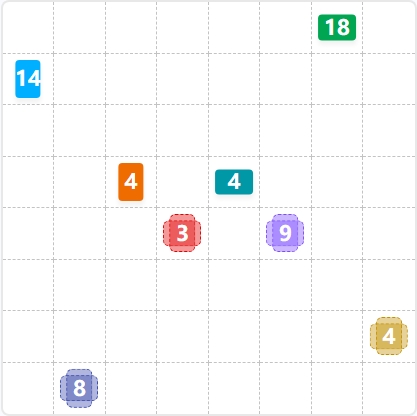
Answer
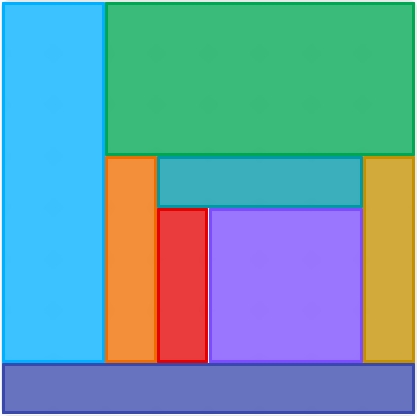
Patches #26 Expert Logic
🧩 Deep Logic Analysis
Solving Patches #26 requires a "top-down, bottom-up" approach to define the boundaries of the largest shapes before the central cluster can be resolved. Successful practice with these puzzles often starts by identifying the most constrained dimensions.
Step 1: The Bottom Anchor (Deep Blue 8)
The Deep Blue 8 is positioned in the bottom-left corner area. In an grid, an 8-unit shape often functions as a "full-width" foundation. By placing it as a horizontal strip across the entire bottom row, we create a stable base for the remaining shapes to rest upon.
Step 2: The Vertical Pillar (Light Blue 14)
The Light Blue 14 sits against the left wall. The factors of 14 are or . Since the grid height is 8 and we already occupied the bottom row with the Deep Blue 8, only a vertical rectangle fits perfectly from the top edge down to the foundation.
Step 3: The Square Anchor (Purple 9)
Squares are the easiest anchors. The Purple 9 is almost always a square. Placing it in the lower-right quadrant, just above the foundation, provides the necessary constraints to define the smaller surrounding rectangles.
Step 4: The Header (Green 18)
With the Light Blue 14 taking up the first two columns, we have 6 columns remaining. The Green 18 in the top right fits perfectly as a horizontal rectangle, sealing the top of the grid.
Step 5: The Final Connectors
The remaining space is a central void. The Orange 4 ( vertical) and Red 3 ( vertical) line up to the left of the Purple 9. The Teal 4 ( horizontal) caps them, and the Yellow 4 ( vertical) seals the right edge, completing the 64-square tiling.
🎓 Lessons Learned From Patches #26
1. The "Factorization Filter"
Before placing a shape, list its factors. For 14, was the only viable geometry given the grid limits. If a number is prime (like 3), it must be a strip, which helps narrow down placement significantly.
2. The Full Coverage Law
In this specific grid, the sum of all clues () equals exactly 64. This tells you there is zero "dead space." If your logic leaves a single empty cell, one of your rectangle dimensions is incorrect.
💡 Trivia
- The Tiling Constant: The arrangement in Patches #26 is a form of "Perfect Tiling." While most famous for squaring the square, tiling a larger square with smaller, non-equal rectangles is a foundational problem in combinatorial geometry.
- The Power of 9: The Purple 9 in this grid is a "Gnomon" candidate. In geometry, a gnomon is a shape that, when added to a figure, yields a new figure similar to the original. Here, the square acts as the central pivot for the entire right-hand logic.
❓ FAQ
Why couldn't the Light Blue 14 be a 1x14 strip?
The grid is an square. Any shape with a dimension larger than 8 is physically impossible to place, forcing the 14-unit shape to be a rectangle.
How do we know the Purple 9 must be a 3x3 square and not a 1x9 strip?
Similar to the 14-unit shape, a strip exceeds the grid's maximum dimension of 8. Therefore, the only available factor pair for 9 that fits within the grid is .
Could the Teal 4 and Orange 4 swap positions?
No. The Teal 4 clue is positioned horizontally relative to the Orange 4. If you attempted to make the Teal shape a vertical , it would collide with the Green 18 header or the Purple 9 anchor, breaking the logical flow of the grid.