
LinkedIn Patches #31 Answer
Stuck on today’s grid? Get the LinkedIn Patches #31 solution and expert logic to maintain your streak instantly. Beyond the answer, explore our tactical hints to refine your spatial reasoning and master the game through daily practice.
Patches #31 Answer
Start
Answer
Patches #31 Expert Logic
🧩 Deep Logic Analysis
Solving Patches #31 requires a blend of spatial reasoning and elimination. With a grid (36 total cells), the key is to identify which shapes are "bottlenecked" by their neighbors. Success in this puzzle comes from the practice of looking at the perimeter first.
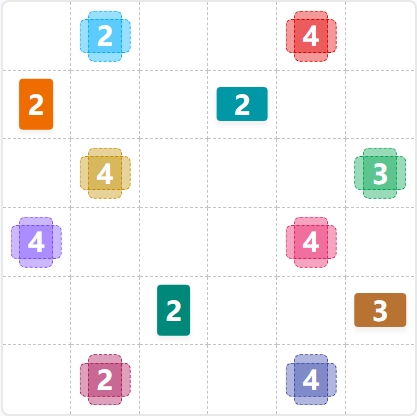
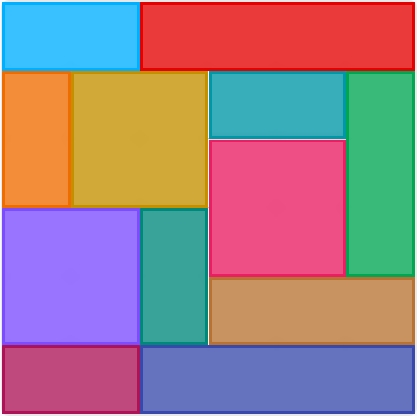
- The Top-Left Anchor: The Sky Blue 2 and Orange 2 are the immediate starting points. Since the Sky Blue 2 sits in the top row and must accommodate the Orange 2 directly below its left edge, it must be a horizontal block. This forces the Orange 2 to be a vertical block to avoid overlapping or leaving gaps.
- The Top Edge Clearance: Once the Sky Blue 2 is placed, the Red 4 is forced into a horizontal strip to finish the top edge of the grid. Any other orientation for the Red 4 would create unreachable dead space in the top-right corner.
- The Center "Square" Logic: The Yellow 4, Purple 4, and Pink 4 are positioned such that strips would cause catastrophic collisions. By placing the Yellow 4 as a square, it perfectly bridges the gap between the Orange 2 and the center. This chain reaction forces the Purple 4 into a square at the bottom-left and the Pink 4 into a square in the center-right.
- The Right Perimeter: The Green 3 is constrained by the Pink 4 and the right edge. It must be a vertical column. Similarly, the Brown 3 must be a horizontal block to occupy the space above the bottom row without interfering with the Dark Blue 4.
- Finalizing the Base: The Dark Blue 4 must be a horizontal strip at the bottom-right to fill the remaining width, leaving just enough room for the Magenta 2 () at the bottom-left.
🎓 Lessons Learned From Patches #31
The Prime Number Trap
In Patches, numbers like 2 and 3 are "brittle." They have only two possible orientations ( or ). When you see a 3 near a corner, like the Green 3 or Brown 3 in this grid, check the perpendicular axis first. If one direction is blocked by even a single cell, the shape is instantly solved.
The "Square" Default
Even numbers like 4 can be tricky because they offer more variety (, , or ). As a general rule, if a number is surrounded by other clues, it is statistically more likely to be a compact square than a long strip. Testing the square hypothesis first is a great way to simplify your practice sessions.
💡 Trivia
- Tiling Theory: This puzzle is a form of "Perfect Squared Square" logic, a mathematical concept where a square is tiled with smaller squares or rectangles. While our grid uses rectangles of different areas, the logic stems from Brooks' Smith's work on electrical network theory applied to geometry.
- The 2x2 Phenomenon: In a grid, squares are the most "efficient" shapes. They occupy exactly 11% of the total board, which is why they often act as the "keystones" that hold the center of the puzzle together.
❓ FAQ
Why couldn't the Pink 4 be a vertical strip?
If the Pink 4 were a vertical strip, it would extend into the bottom row, preventing the Dark Blue 4 and the Brown 3 from having enough room to resolve without overlapping or leaving empty cells.
What makes the Green 3 a vertical rather than a horizontal?
The Green 3 is positioned on the far right edge. If it were horizontal (), it would have to extend toward the center, which is already occupied by the Pink 4 and the Dark Teal 2.
Is there always a unique solution to these grids?
Yes. LinkedIn Patches are designed so that through consistent practice, players can find a single logical path where every cell is filled and no rules are broken. If you find two possibilities, you likely missed a constraint on the perimeter.