
LinkedIn Patches #32 Answer
Stuck on today’s grid? Get the LinkedIn Patches #32 solution and expert logic to maintain your streak instantly. Beyond the answer, explore our tactical hints to refine your spatial reasoning and master the game through daily practice.
Patches #32 Answer
Start
Answer
Patches #32 Expert Logic
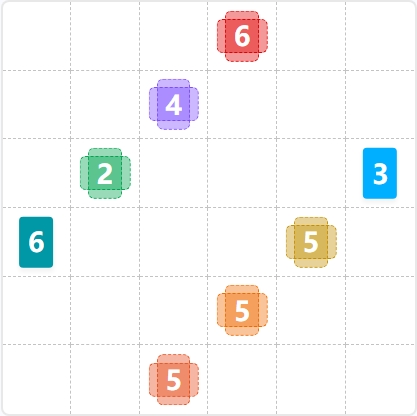
Solving today’s LinkedIn Patches puzzle requires a sharp eye for spatial constraints and a methodical approach to "filling the bucket." In Patches #32, the grid offers exactly 36 squares of area, and our clues () sum to exactly 36. This tells us there will be no empty space—a "perfect fit" scenario.
🧩 Deep Logic Analysis
The key to this grid lies in identifying the "anchor" shapes that dictate the orientation of everything else.
-
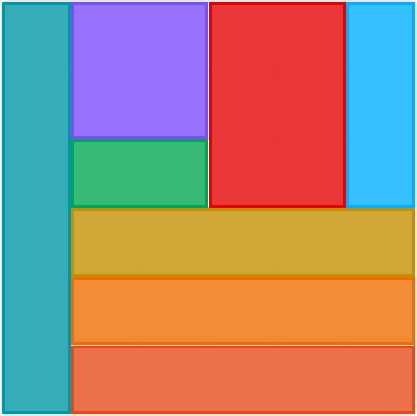
The Vertical Anchor (Teal 6):
The Dark Teal 6 is located on the far-left edge. In a grid, a value of 6 positioned on the perimeter often suggests a or strip. Because it sits in a column, extending it horizontally would block the entire row and isolate the top and bottom. By placing it as a vertical strip, we define the left boundary immediately. -
The "Five-Stack" Chain Reaction:
Once the Teal 6 occupies the first column, we are left with a workspace. We have three clues with the value of 5 (Gold, Orange, and Salmon). Since the remaining width is exactly 5 units, these must be horizontal rectangles. They stack perfectly at the bottom, claiming the lower half of the grid. -
The Right Perimeter (Blue 3):
With the bottom three rows occupied by the 5-strips, the Blue 3 on the far right is pushed into the top three rows. The only way a 3 fits into a 3-high, 1-wide space is as a vertical rectangle. -
The Final Core (Red 6, Purple 4, Green 2):
We are left with a gap in the top center. The Red 6 clue is centered in the upper-right of this gap; a vertical rectangle fits perfectly next to the Blue 3. This leaves a space for the Purple 4 and Green 2. To satisfy both, the Purple must be a square, leaving a slot for the Green 2.
🎓 Lessons Learned From Patches #32
- The Residual Width Strategy:
Always subtract the width/height of "edge-to-edge" strips from the total grid dimensions. Once the Teal 6 was placed, the grid's effective width for all other shapes became 5. This turned the three "5" clues from puzzles into obvious horizontal fillers. - Factor Pair Elimination:
When you see a 4 and a 2 sharing a small space, there is only one configuration that works without overlapping. Constantly practice visualizing how factor pairs (like vs. ) consume the remaining "white space" to avoid back-tracking.
💡 Trivia
- Perfect Packing: This grid is a "dissection puzzle," where a square is divided into smaller rectangles. The fact that the sum of the clues matches the total area () makes it a "Perfect Dissection," a concept studied extensively by mathematicians regarding "Squaring the Square."
- The Power of 5: In Patches, prime numbers like 3 and 5 are the easiest to place because they have only one possible set of dimensions () unless the grid is significantly larger than the number itself.
❓ FAQ
Could the Teal 6 have been a rectangle instead of a strip?
No. If the Teal 6 were a block, it would have pushed the Purple 4 and Green 2 into the center, leaving no room for the Red 6 or the horizontal 5s to span the necessary width of the grid.
Why are the three 5s stacked horizontally rather than vertically?
The grid is only 6 units high. If even two of the 5s were vertical, they would occupy nearly the entire height of the grid, leaving no room for the Teal 6 and Blue 3 to exist on the same vertical plane. The horizontal stack is the only way to accommodate three shapes of that length.
Is there ever a scenario where the shapes don't fill the entire grid?
In some LinkedIn Patches levels, there may be "dead space," but in most daily puzzles, the total sum of the clues equals the total area of the grid (). Checking this sum is a great practice for beginners to determine if they should be looking for gaps or a perfect fit.