
LinkedIn Patches #43 Answer
Stuck on today’s grid? Get the LinkedIn Patches #43 solution and expert logic to maintain your streak instantly. Beyond the answer, explore our tactical hints to refine your spatial reasoning and master the game through daily practice.
Patches #43 Answer
Start
Answer
Patches #43 Expert Logic
Here is the strategic breakdown and logical analysis for this LinkedIn Patches grid.
🧩 Deep Logic Analysis
Deconstructing today's LinkedIn Patches puzzle reveals a masterclass in spatial deduction. Here is the step-by-step chain reaction that cracks the grid wide open:
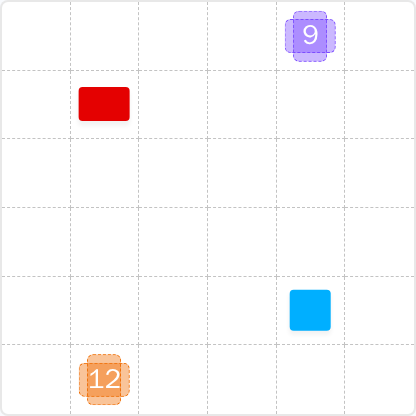
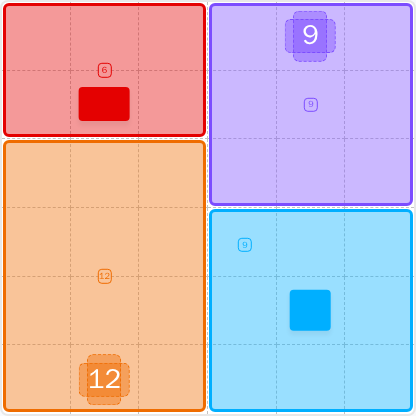
- The Starting Point (Clue Collision): The most restricted clue is the Orange 12. Its dashed outline indicates a "tall" rectangle (height > width). The factors of 12 give us two viable tall options for this grid: or . If we try a shape, it would stretch across all six rows, directly overlapping and invalidating the Red clue at Row 2. Therefore, the Orange shape must be a tall rectangle.
- Anchoring the Orange 12: To fit a shape around the Orange clue without isolating unfillable gaps in the bottom-left corner, it must be anchored exactly in Columns 1-3 and Rows 3-6.
- The Purple 9: The Purple 9 features a square dashed outline. In a grid, the only square configuration for an area of 9 is . Anchoring it to the top-right corner (Columns 4-6, Rows 1-3) perfectly encapsulates the clue while leaving the rest of the board structurally open.
- The Chain Reaction Completion: With Orange taking the bottom-left and Purple taking the top-right, look at the top-left quadrant. We are left with exactly a space (Columns 1-3, Rows 1-2). This naturally isolates the Red clue and perfectly satisfies its "wide rectangle" requirement (width 3 > height 2).
- The Blue Square: Finally, the remaining void in the bottom-right quadrant forms a natural square. This aligns flawlessly with the Blue square clue, completing the board with no overlapping pieces.
🎓 Lessons Learned From Patches #43
Success in this logic puzzle requires looking beyond a single shape. Here are the tactical takeaways to apply to your daily routine:
- The Clue Collision Strategy: Always check the maximum bounds of your largest shapes. Projecting the Orange 12 upwards immediately showed it would hit the Red clue. Recognizing these invisible boundaries early is the best way to practice advanced grid logic.
- The Power of the Void: Notice how the Blue clue didn't even need a number? Sometimes, focusing on the highly restricted numbered clues (like 9 and 12) organically builds the boundaries for the unmarked shapes. Let the "void" do the work for you.
- Corner Anchoring: Large shapes with specific aspect ratios (like a tall rectangle) have very few viable placements. Pushing them flush against the grid's corners prevents tiny, unfillable gaps from ruining your board.
💡 Trivia
- The Magic of 36: Today's grid has a total area of 36. In mathematics, 36 is unique because it is both a square number () and a triangular number (the sum of integers from 1 to 8). This geometric flexibility is exactly what makes it such a perfect canvas for area-packing logic puzzles!
- Highly Composite Targets: The number 12 is a "highly composite number," meaning it has more divisors than any smaller positive integer. Puzzle designers love using 12 precisely because its flexibility forces the player to deduce between multiple aspect ratios (in this case, logically eliminating the to find the ).
❓ FAQ
Why couldn't the Orange 12 be a 2x6 strip?
If it were a tall rectangle, it would have to stretch vertically from the very bottom of the grid to the very top. This placement would force it to swallow the Red wide rectangle clue sitting at Row 2, Column 2, creating an invalid clue collision.
How do we know the Blue patch is exactly 3x3?
The Blue clue only dictates a square shape, not a specific area number. However, once the Orange , Red , and Purple shapes are logically locked into their respective corners, the only remaining empty space in the grid is a void in the bottom-right, which perfectly satisfies the Blue square requirement.
Why is the Purple 9 forced into the top-right corner?
The Purple clue explicitly requires a square shape. The only way to form a square with an area of 9 is a grid. Given the clue's location, shifting the shape anywhere else would isolate empty columns on the right edge, making it impossible to fill the rest of the board with valid rectangles.