
LinkedIn Patches #49 Answer
Stuck on today’s grid? Get the LinkedIn Patches #49 solution and expert logic to maintain your streak instantly. Beyond the answer, explore our tactical hints to refine your spatial reasoning and master the game through daily practice.
Patches #49 Answer
Start
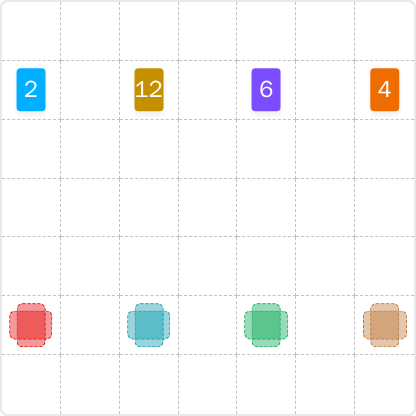
Answer
Patches #49 Expert Logic
Here is the deep dive into today's LinkedIn Patches puzzle.
🧩 Deep Logic Analysis
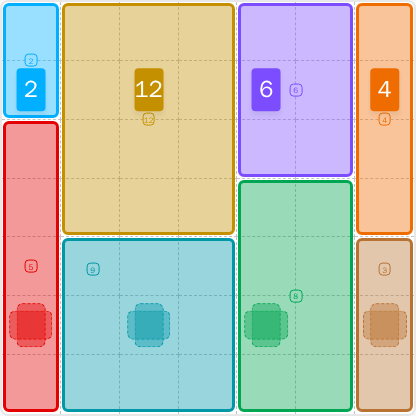
The Starting Point: The Edges and Corridors The most efficient way to crack this 7x7 grid is by observing the strict vertical alignment of the perimeter clues. On the far left, the Blue 2 and the un-numbered Red patch share a single column. On the far right, the Orange 4 and the Tan patch mirror this setup.
Since the grid is exactly 7 squares tall, the only mathematical way to enclose these edge clues without leaving stranded, unfillable squares is to stretch them vertically. The left column neatly divides into a 1x2 (Blue) and a 1x5 (Red). The right column perfectly splits into a 1x4 (Orange) and a 1x3 (Tan).
The Chain Reaction With the left and right 1-wide "walls" established, you are left with a 5x7 inner arena. Here is how the rest of the board collapses:
- The Giant in the Room: The Yellow 12 is massive. In a 5-wide space, a 2x6 would choke out adjacent shapes, leaving a 3x4 block as the most structurally sound option.
- Establishing Lanes: Dropping the 3x4 Yellow block into columns 1, 2, and 3 forces the Light Blue patch directly beneath it to form a 3x3 square (area 9) to reach the bottom boundary.
- The Final Void: This leaves exactly two columns for the Purple 6 and the Green patch. The Purple 6 easily forms a 2x3 block at the top, forcing the Green patch to fill the remaining 2x4 void (area 8) at the bottom.
🎓 Lessons Learned From Patches #49
- The Mega-Column Strategy: When puzzles feature numbers stacked vertically on the edges, test if they can form 1-wide vertical strips that span the entire height of the board. This often acts as a skeleton key for the rest of the grid.
- Factorization Filters: A 12-block in a constrained space is almost always a 3x4 rectangle rather than a 2x6 or 1x12. Consistent practice with prime factor combinations makes visualizing these chunky blocks second nature, allowing you to instantly rule out impractical dimensions.
💡 Trivia
- Mathematical Slicing: The designers of this specific grid created a beautifully elegant mathematical subdivision. Even though it looks complex, the solved puzzle is actually just four distinct, unbroken vertical columns with widths of 1, 3, 2, and 1.
- The Leftover Square: The total area of this 7x7 grid is 49. If you sum up the numbered clues (2 + 12 + 6 + 4), they equal exactly 24. This leaves 25 squares leftover for the un-numbered patches—meaning the "blank" space on the board is a perfect square number!
❓ FAQ
Why couldn't the Yellow 12 be a 2x6 rectangle?
A 2x6 configuration would either hit the grid's boundaries or illegally intrude into the space required by the Purple 6. The 3x4 shape perfectly respects the vertical "lanes" established by the board's layout.
How do we determine the exact size of the un-numbered patches?
By working backward from the remaining space! Once the numbered shapes (like the Blue 2 and Orange 4) claim their required cells, the un-numbered patches simply expand to fill the void, behaving like water taking the shape of its container.
Why is the Blue 2 placed vertically instead of horizontally?
If the Blue 2 were a horizontal 2x1 block, it would push into the second column, disrupting the precise 3-column width needed by the massive Yellow 12 block and stranding an unfillable column of squares directly below it.